Unraveling (Financial) Barriers Faced by Women in Politics
Written Dr. Kaitlin Senk, Lecturer in Politics – University of Bath
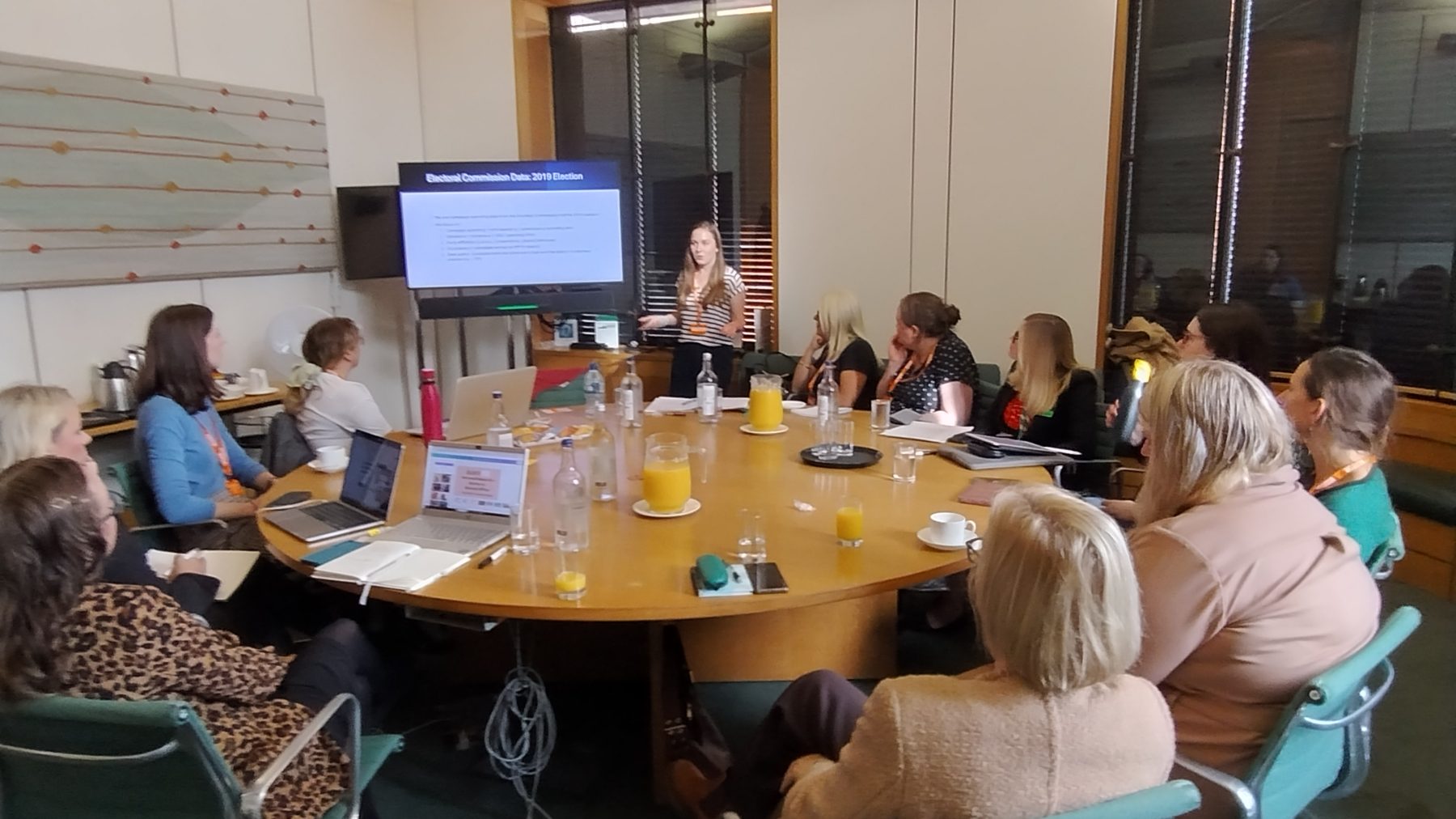
On Tuesday October 8th 2024, Hilde Coffé and Kaitlin Senk, both affiliated with the Department of Politics, Languages and International Studies at the University of Bath, hosted a roundtable in Parliament titled “Unraveling (Financial) Barriers Faced by Women in Politics.” The aim of the event was to hear from various practitioners, elected officials, and potential candidates about the financial barriers that women face when standing for election. The event started with a presentation from Hilde and Kaitlin that provided findings based on Electoral Commission spending data for the 2019 election. These findings revealed that candidates are more likely to win their elections as they spend more of their campaign funding limits and receive higher levels of campaign donations, and this is especially true for candidates running in vulnerable districts and those who are running for the first time.* Conservative women might be particularly disadvantaged electorally as they tend to be placed in more vulnerable electoral districts and tend to be political newcomers. This was followed by a presentation from Katie McSherry from Elect Her which provided insight into the impact of personal finance on running election campaigns with testimonials from women who have benefited from their Fund Her project. Both presentations highlighted the importance of financial investment in the electoral success of women candidates and the barriers and financial barriers and challenges that women face. The presentations were followed by a lively discussion from members of Centenary Action, 50/50, the Labour Women’s Network, newly elected candidates, Elect Her, the Disability Policy Center, Jo Cox Foundation, Global Institute for Women Leadership, etc. This discussion touched upon several main barriers to women’s representation, as well as potential solutions.
Specifically, we discussed the importance of funding at various stages of the campaign process. These financial constraints are particularly pronounced for battleground candidates running in more competitive districts that are crucial for the party to win. For these candidates, campaigning is a full time job and many may not be able to maintain full-time employment, taking pay cuts or unpaid leave. For women who are single earners, this makes campaigning particularly costly. This cost is coupled with the uncertainty of various stages of the campaign where candidates, especially in competitive districts, may start their campaign before they are selected by the party. This amounts to a high level of uncertainty of whether they will be selected by the party or win their election depending on whether candidates are in the selection stage or the short and long stages of the campaign. One potential solution discussed centers around seeking support from employers for those campaigning, allowing these employees flexibility to use paid leave hour and time from work to run their campaigns. Additionally, a financial safety net for women candidates who have been selected by the party to run, might benefit women from lower socioeconomic backgrounds who are selected for candidacy, and thus actively campaigning, who may have to limit working hours.
Additional barriers discussed centered on education and knowledge of campaign finance resources from a public and candidate perspective. Much of the information on campaign finance is challenging to navigate and can pose obstacles to new candidates seeking election. One solution discussed was to provide transparent and public resources that inform candidates of available resources and links to relevant civil society organizations working in these areas. For example, MPs may not know what they can claim as campaign expenditures which can often mean candidates and MPs using personal resources to fund their political campaigns and careers. Additionally, men candidates might be more inclined to ask for funding or to expense certain claims. Providing greater transparency can even the playing field for men and women. Additionally, there is a need to expand knowledge of campaign finance to the public, not just for potential candidates, to help move public opinion on campaign finance and transparency. Candidates and elected officials, women in particular, often face backlash from the public for expenditures campaigning or in office. An initiative to provide civic education for the public can potentially address these knowledge gaps and reduce levels of public backlash that candidates and elected officials experience.
The full report can be read here.