Margaret Thatcher: Rising to Leadership and Shaping the Conservative Party
Written by Dr Noshaba Khiljee
The year is 1979, Britain is on the brink of industrial collapse. The Prime Minister, James Callaghan, calls a General Election, and on Thursday the 3rd of May, Margaret Thatcher won 339 seats becoming Britain’s first female Prime Minister. How did Thatcher get to lead our great Conservative and Unionist Party?
Margaret Thatcher, known as ‘Iron Lady’; was transformative. Her rise to the leadership in 1975 was not just strategic, but a culmination of her values, convictions, and the shifting ideological tides within our party. In today’s politics, her influence continues, not least in the most recent leadership contest, where we saw both Jenrick and Badenoch echo her commitment to principles of personal responsibility, economic freedom, and national sovereignty.
Thatcher’s journey to the top of the Party was marked by perseverance. Born in Grantham to a grocer father who served as local Mayor, she was instilled with a strong work ethic and a belief in self-reliance from an early age. These formative values became the bedrock of her philosophy.
After studying chemistry at Oxford, she worked as a research chemist, then turned to law, qualifying as a barrister while raising her children. Elected as the MP for Finchley in 1959, Thatcher quickly established herself as a formidable voice in Parliament, known for her meticulous preparation and clarity of thought.
Her rise within the Conservative Party gained momentum in the early 1970s, during Edward Heath’s leadership. Heath, the party leader and Prime Minister from 1970 to 1974, was increasingly criticised for his economic policies, which many saw as failing
to tackle Britain’s growing inflation, industrial strife, and declining global influence.
Thatcher challenged Heath’s leadership in 1975, a move that surprised many within the party. Her victory in the leadership contest was a signal of a broader ideological shift within the Conservative Party, away from Heath’s centrist policies, towards a laisse-fair, individualistic vision.
Thatcher’s victory over Edward Heath in the 1975 leadership contest was a watershed moment for the Conservative Party. Her campaign capitalised on growing dissatisfaction with Heath’s leadership and the party’s direction. She offered a clear alternative: a commitment to free-market economics, a tougher stance on union power, and a vision of Britain as a confident, self-reliant nation.
Her gender, though initially seen as a potential liability, became an asset. Thatcher presented herself as a fresh, unorthodox choice, untainted by the compromises of Heath’s government. Her directness, intellectual rigor, and unwavering confidence won over key figures within the party, securing her place as leader.
Thatcher’s leadership reshaped our party more broadly. For one, she inspired me to join the party. As a physician, her scientific background and economic ideals resonate greatly, alongside her approach to governance – principled, decisive, and unafraid of controversy. She set a new standard for political leadership, and one we desperately need in our times.
In today’s Conservative Party, we are led by Kemi Badenoch, who is a leader who carries forward Thatcher’s legacy, adapting her principles to the challenges of the 21st century.
(this blog contains the views and content of the blog author and do not reflect the views of 50:50 Parliament)
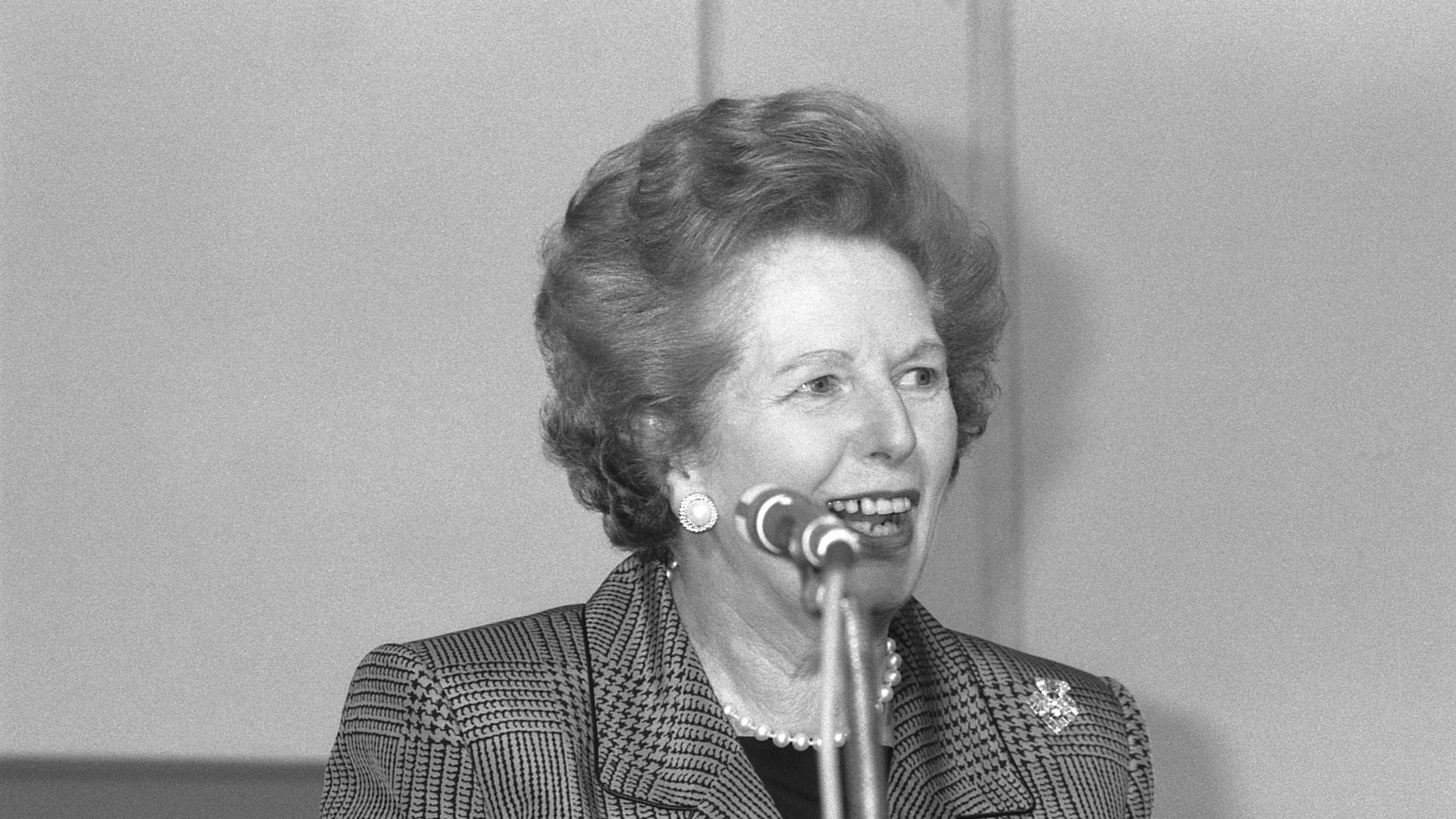
Image: David Fowler