Gender Equality at Liberal Democrat Conference
Written By Ulysse Abbate
For 4 Autumn Conference in a row now, the Liberal Democrats have passed policies supporting gender equality in politics and society.
- In 2021 Conference passed a motion to End Violence Against Women and Girls
- In 2022, Conference passed a motion on Making Diversity More Intersectional
- In 2023, Conference passed a motion on Ending Period Poverty
- In 2024, Conference passed a motion on Equitable and Improved Outcomes Throughout Pregnancy and the Neonatal Period
With the motions being by championed by organisations including Liberal Democrat Women, Young Liberals and local parties like Lambeth Liberal Democrats, the Liberal Democrats’ Commitment to equalities has never been clearer. In the General Election, Liberal Democrats returned 32 women MPs (44%), a larger intake of women than the Conservatives, who returned 50 more MPs in total!

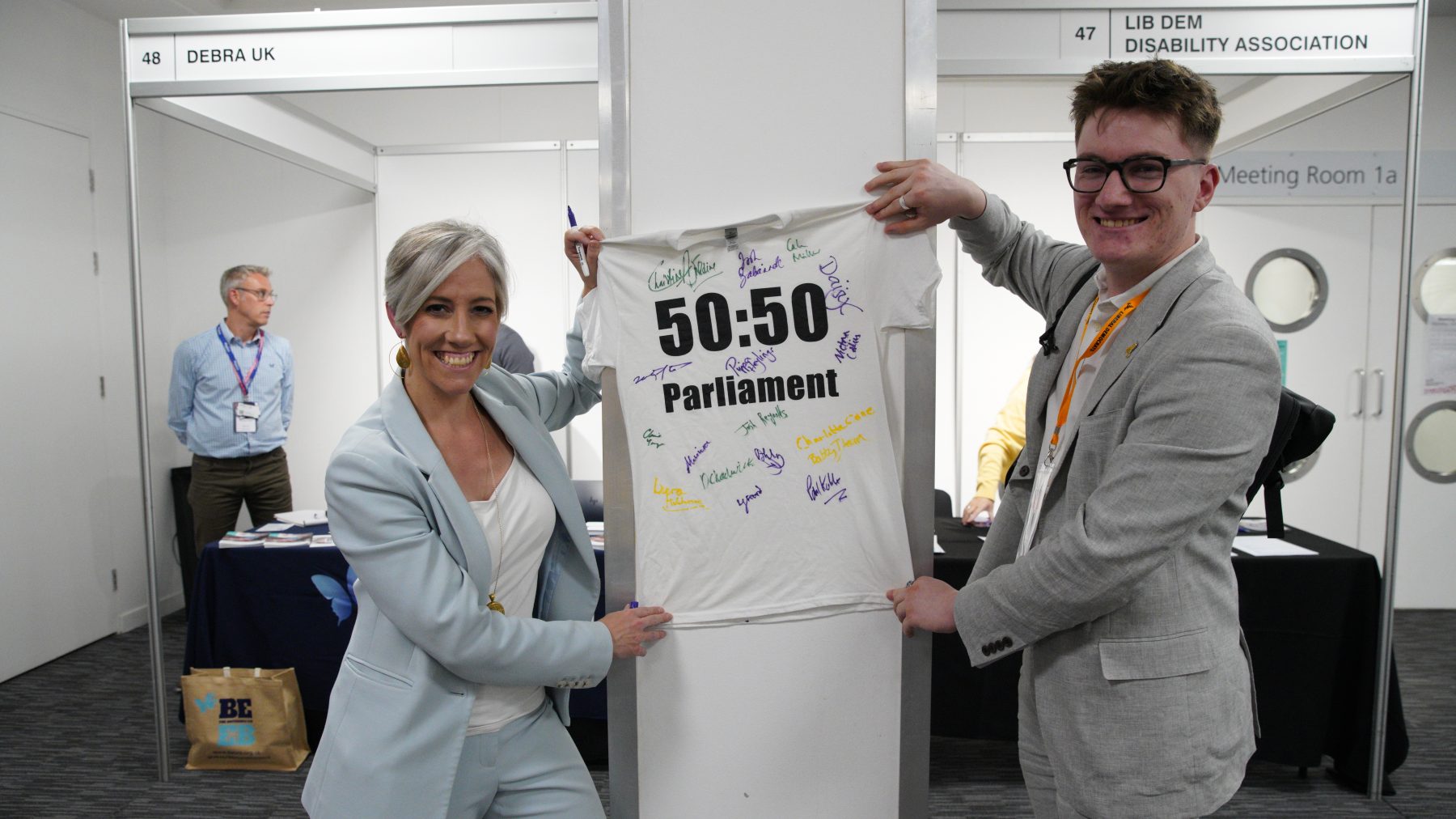
Daisy Cooper MP, David Chadwick MP, Claire Young MP, Wendy Chamberlain MP, Christine Jardine MP
But even with successful representation in Parliament, and ambitious policies passed through conference, work continues. At the 2024 Autumn Conference Lib Dem Women fringe, on what a womanifesto would look like, further opportunities to champion gender equality were discussed.
Firstly, the importance of considering intersectionality was mentioned, as a key barrier for tackling inequalities. Too often, those tackling discrimination consider actions that treat entire communities the same. Only by considering the intersection between different forms of discrimination and inequality (from gender to ethnicity, disability to sexual orientation and more), can we properly deliver reform that helps individuals.
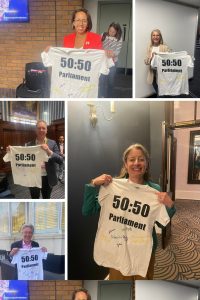
Munira Wilson MP, Wera Hobhouse MP, Richard Foord MP, Helen Maguire MP, Paul Kohler MP
Secondly, the risk of social media was highlighted as a risk to the involvement of women in politics. The unregulated nature of social media allows users to share content with few restrictions. Misogynist and overly aggressive content can easily be shared (even blocking individuals can be circumnavigated with new accounts), and evidence shows that women are disproportionately impacted by this type of online content.
Finally, on education, the importance of properly educating young people (young men in particular) was raised. The internet (including social media and pornography), has been proven to push young men to believe in certain ideals on gender relations. Characters like Andrew Tate (on house arrest for sex trafficking and other similar crimes) are becoming increasingly popular, whilst internet culture promoting strict gender roles (often with women being seen as inferior to men) continues to dominate social media channels.
Whilst Liberal Democrat conference showed the power of politics for good, we shouldn’t be (and are not) complacent on the steps we still need to take to empower women. Mutual support form and for groups like 50:50 Parliament, ensure that we can keep gender equality at the heart of policy-making and politics.
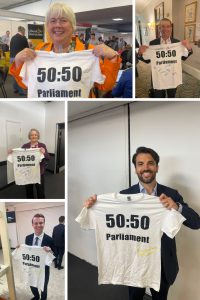
Christine Jardin MP, Callum Miller MP, Pippa Heylings MP, Joshua Reynolds MP, Bobby Dean MP